How I built Aura, a custom Zoom alternative for an online school
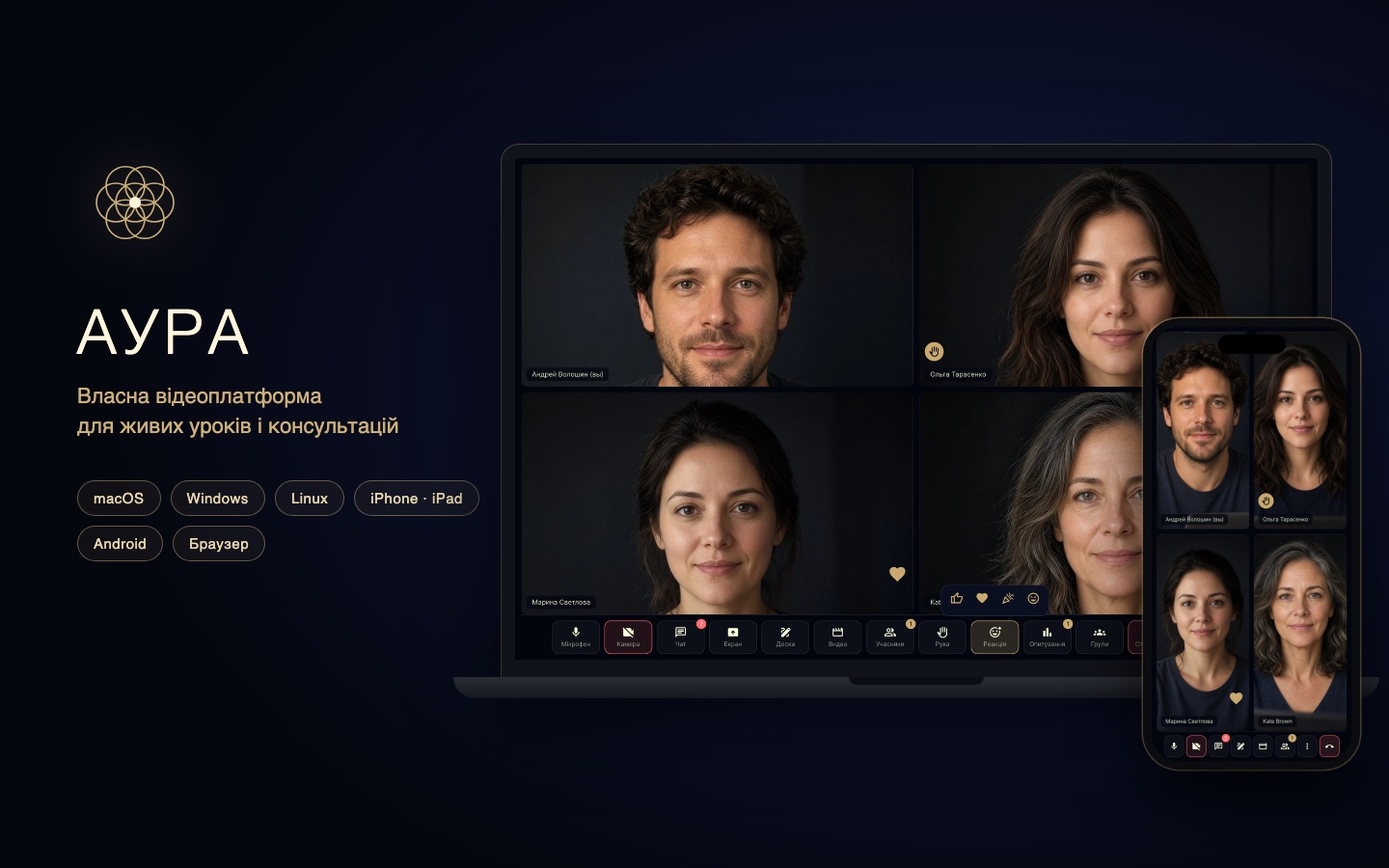
While I was working on the platform for the international school IEA Source of Energy, lessons were held on Zoom. It worked, but every new cohort made it a little less convenient. That is how the idea of a custom video platform, which we named Aura, was born.
Why a school needs its own Zoom
There were several reasons, and none of them were about ambition:
- Access. A lesson link is easy to forward to someone who never paid for the course. In Aura, only students with access in the school’s dashboard can join a lesson.
- One place. Students kept jumping from the website to a separate app and back. Now the schedule, the lesson and the materials live in one ecosystem.
- The right features. The school needed polls, group work and lesson recording that match the way it actually teaches.
- Brand. Students see the school, not someone else’s logo.
How Aura works
Writing video calling from scratch makes no sense, so Aura is built on LiveKit, an open-source WebRTC media server. It handles the hardest parts: delivering video and audio between participants, adapting quality to each student’s connection and keeping large groups stable.
The interface is written in Vue 3 and TypeScript. On top of the video I built what a lesson actually needs: screen sharing, a shared whiteboard, chat, polls, reactions, breakout groups and recording. I also put extra care into the pre-join screen where you can check your camera and microphone, which removed a lot of questions from students.
The same code runs in several environments. In the browser it opens with a simple link. Windows, macOS and Linux get a desktop app built with Electron, and phones get a Capacitor build. This way the school maintains one product, not three.
What I learned
- The network is always worse than you think. Test on weak mobile internet and old laptops, not just on office Wi-Fi.
- Small things matter most. A clear microphone button and a hint about browser permissions save more time than any complex feature.
- You don’t have to build everything yourself. An existing media server let me focus on what really makes the product different.
- Launch is only the beginning. The best improvements came after the first weeks of real lessons and feedback from teachers.
Aura showed that a custom video platform is no longer a privilege of big companies. If your business is built around live classes or consultations, a tool like this can be a very achievable step.
 MacTep_JP